| Laconia Prefecture |  |
Laconia Greece Hotels Laconia Hotel Accommodation, Neapolis, Sparta, Mystras, Monemvasia, Elafonissos, Gythion, Map of Laconia (Lakonia) Peloponnese
 |
|
|
||||||
|
||||||||
|


Laconia Greece
A gifted place promising an unprecedented holiday experience
The history, the scenic landscape and the climate combine and give the Laconian land its special characteristics. Human presence has left its traces in the whole area of Laconia prefecture. The archeological findings are scattered everywhere: from the caves of Diros to Vafio, Elos, Pellana and Maleas of the archaic era, to Sparta of the historic era, to the Byzantine Mistras, Geraki and Monemvassia. And finally to Mani, from the castles of which broke out the uprising of 1821.
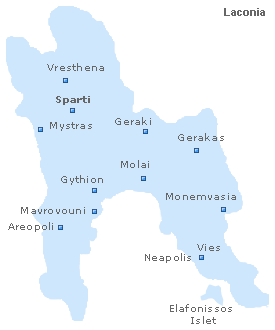
Laconia (Lakonia) is situated on the northeastern part of Peloponnese and covers an area of 3.636 km. Its terrain is mostly semi-mountainous, with rich and fertile plains and 5% of the area is taken up by forests. It is washed by the Messinian and the Laconian Bays, also by the Myrtoon and Cretan Seas. The wonderful islets Trinassos, Glaros, Leptonissi, Kasela, Roditsa, Daskalio and the island Elafonissos belong to Laconia. It is defined by the two impressive mountain ranges: Taygetos on the west and Parnonas on the east and between them the river Eurotas flows through the Laconian plain.
The plains around Sparta are extremely fertile, full of orange and olive trees. There follows a hilly region where you can find a great variety of aromatic herbs and brushwood.
From an administrative aspect the prefecture of Laconia consists of four provinces: Gythio (its capital Gythio), Epidavros Limira (its capital Molai), Lacaedaemon (its capital Sparta) and Itilo (its capital Areopolis). It has a population of 95.695 people whereas 14.084 of them reside in Sparta. The prefecture’s financial resources derive mainly from agriculture. The most important products are its famous olive-oil, oranges, figs, honey and tomatoes.
Laconia Greece Hotels
Laconia Greece has excellently developed tourist infrastructure offering numerous hotels, villas, studios, apartments and rooms for rent spread all over the prefecture. You can find accommodation that will satisfy your needs to the utmost with its up-to date facilities and comfort services, not only in towns such as Gythio, Sparta, Mani, Itilo, Neapoli, Monemvasia, but also in smaller charming seaside and mountainous settlements. Pick the most suitable type of accommodation that suits you best and relish a unique holiday around Laconia Greece.
Laconia Greece Nightlife & Events
If you want to combine your vacation with night-time entertainment, scrumptious traditional dishes and various cultural events, then Laconia Greece is the top destination for you. It offers vibrant nightlife in charming little bars, there are all-day cafés and restaurants serving various delicacies all around the prefecture, providing visitors with everything they need for carefree and exciting vacations.
Entertainment in Laconia does not end with clubbing or dining, as there are various cultural and athletic events and festivals. If you find yourself in Laconia during summertime, you will be given the chance to attend cultural festivals with various events, such as plays and concerts and visit exhibitions in Sparta, Gyhtio, Monemvasia and Neapoli. In Mytras there is a big festival taking place every year from August 26 to September 2, which attracts people from the whole of Peloponnese and other Greek areas. In Sparta, it is worth attending the athletic event “Spartathlon”, in which international athletes take part, in remembrance of Phidippides, a herald who run from Athens to Sparta to request help against the Persians.
Laconia Greece Sightseeing
If you have time to dedicate to sightseeing in Laconia Greece, you will be glad to discover that this place has a lot to offer in terms of historical and other attractions. Sparta is surrounded by ancient sights and the center of the city is crowned with many neoclassical buildings and monuments. Findings from excavations at the ancient town of Sparta can be seen at the Archaeological Museum of the area. At Amykles is the throne of Apollo, at Vafio lies the Mycenaean tomb where the two world famous golden cups were found and are displayed at the National Archaeological Museum in Athens.
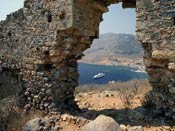
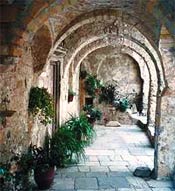
Do not miss taking a tour around the very well preserved Byzantine town of Mystras with the Archaeological Museum and at the scenic castle-town of Monemvasia, which is of unique beauty. At Gythio you can admire the remains of the ancient town, while at a distance of 10 km towards Areopolis you can see the impressive Passava’s castle. Last but not least, do take a tour at the renowned Alepotripa and Vlychada caverns at Pyrgos Dirou. You will stand witnesses of a unique natural phenomenon, stunning stalactites and stalagmites, while part of the Vlychada cavern tour takes place in a boat. It is a unique lifetime experience!
As attractions in this prefecture are innumerable, make sure you get a map of Laconia to guide you through amazing sightseeing moments and provide you with useful travel information.
Laconia Greece Beaches
The two peninsulas of Laconia (Lakonia), the first flat, the second rocky have one common characteristic: the beautiful seashores, some of them with rocky small bays and secluded havens and others with infinite, sandy beaches. In Monemvasia, recreation by the sea can be enjoyed at the municipal beach to the north, at Pera Kakavos and Pori, and to the south at Agia Paraskevi, Nomia, Agios Stefanos and Xifias. Elafonissos possesses exquisite, trademark beaches, such as Kontogoni and Kalogeras near the village, Lefki on the eastern coast, the famous beach of Simos- in the bay of Frangos, with its sand dunes and cedars, the beach of the bay of Sarakiniko and the sandy beach of Panagia on the western coast, opposite four small islands. The sea is generous with its gifts along the coastal region of Gythion, from the municipal beach to the sandy beaches of Mavrovouni and Selinitsa where the Careta-Careta turtles always come to lay their eggs. To the south are the hospitable beaches of Vathi, Ageranos, Skoutari, Kalyvia and Paganea, with crystal-clear water.
Other very well organized beaches to enjoy your swim, outdoor activities and a delicious meal nearby the sea are the beaches in Neapolis, Archangelos, Vathia, Vlachiotis, Molai, Itilo and many more.
Laconia Greece Weather & Climate
The climate of the area, purely Mediterranean, varies with regions. Winter is generally mild, with rainfalls and snowy periods on the mountainous country. Summer is hot, autumn is mild and spring is simply wonderful. Laconia is regarded a perfect destination for carefree vacations all year round.
How to Reach Laconia Greece
You can get to Laconia prefecture by car, the easiest and most convenient way if you want to travel around and get acquainted with the beautiful beaches and important attractions. Sparta is 246 km from Athens, it can be accessed via the National Highway and the trip lasts for approximately 3 hours. There are also frequent intercity bus trips connecting Sparta with Athens, Thessaloniki and various Peloponnese prefectures. What is more, there are ferry boat departures from Gythio to Kithira, Antikithira and Crete and from Neapoli to Kithira, Antikithira and Elafonissos.
| Peloponnese | Tourism in Greece | United Hellas Home Page |
| Hotels - Apartments - Suites throughout Greece | Car Rentals throughout Greece | Travel Agencies throughout Greece |
| Cruises & Sailing Yacht Charters in Greece |